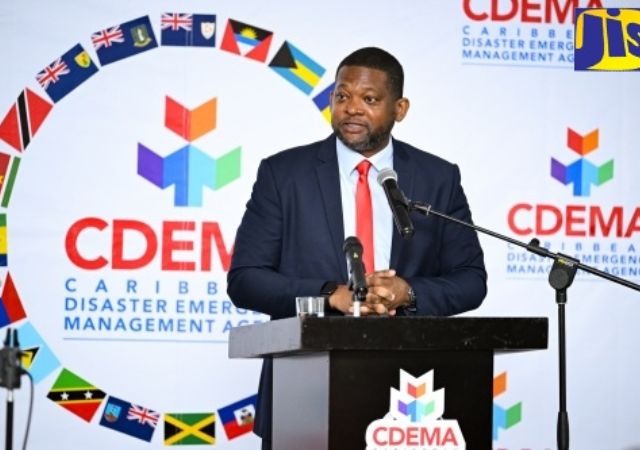
Last month regional stakeholders gathered in Jamaica to undertake a comprehensive review of the Hurricane Melissa response. The aim of the gathering was to improve the Regional Response Mechanism (RRM) and reduce collective risk exposure.
The event was hosted by the Caribbean Disaster Emergency Management Agency (CDEMA) and the Office of Disaster Preparedness and Emergency Management (ODPEM). The three-day RRM After-Action Review (AAR) workshop took place 10 – 12 March at the S Hotel in Kingston.
The workshop which included senior officials, disaster managers, regional agencies, and international partners, pinpointed operational strengths, expose weaknesses, and recommend steps to enhance future readiness.
Main aims of the meeting were to:
- Document what functioned well during the response
- Surface persistent or emerging gaps
- Produce clear, actionable measures to tighten coordination, logistics, and surge capacity.
In her remarks, Executive Director of CDEMA, Elizabeth Riley, said Hurricane Melissa deepened the understanding of the next-level requirements for risk assessment in the era of climate change
Hurricane Melissa was one for the Caribbean’s disaster record books. The storm produced multi-country impacts, stretching national systems across Jamaica, Haiti, and the Bahamas. It also revealed how simultaneous hazards—storm surge combined with extreme rainfall—exceeded assumptions embedded in traditional single-hazard maps.
That observation led to a call for more integrated, scenario-driven risk assessments that reflect the cascading interactions of coastal and inland flooding.
United Nations (UN) Resident Coordinator for Jamaica, Dennis Zulu, gave a stark reminder of the approaching 2026 hurricane season. “The 2026 hurricane season is approaching, and the preparedness cannot wait until the next hurricane is already forming. This means that the recommendations emerging from this review must be actionable, practical and implementable within a short time frame,” Mr. Zulu pointed out.
Image: CDEMA