The NOAA has launched a new suite of artificial intelligence (AI)-driven global weather models. This groundbreaking move will bring a significant advancement in forecast speed, efficiency, and accuracy.
Neil Jacobs, Ph.D., NOAA Administrator, says , “NOAA’s strategic application of AI is a significant leap forward in American weather model innovation. These AI models reflect a new paradigm for NOAA in providing improved accuracy for large-scale weather and tropical tracks, and faster delivery of forecast products to meteorologists and the public at a lower cost through drastically reduced computational expenses.”
AI Global Weather Models
The three AI weather models are:
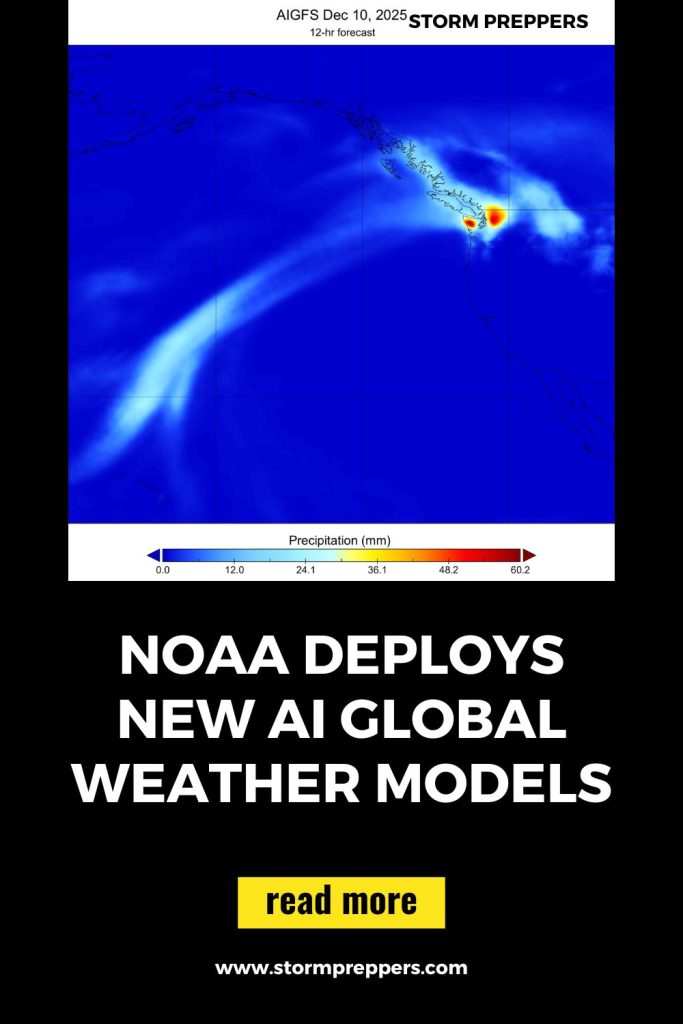
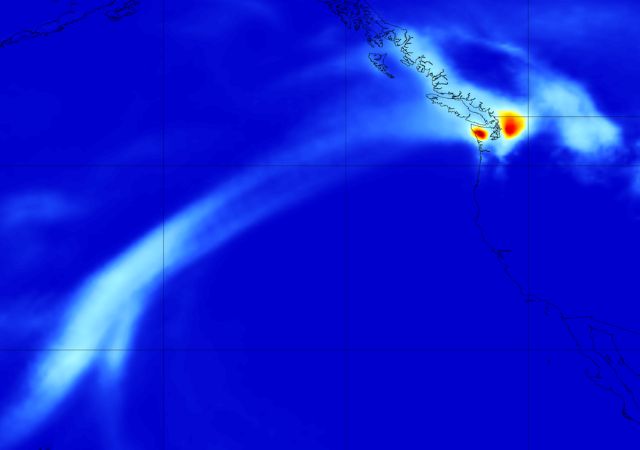
- AIGFS (Artificial Intelligence Global Forecast System): A weather forecast model that implements AI to deliver improved weather forecasts more quickly and efficiently. It uses up to 99.7% less computing resources than its traditional counterpart.
- AIGEFS (Artificial Intelligence Global Ensemble Forecast System): An AI-based ensemble system that provides a range of probable forecast outcomes to meteorologists and decision-makers. Early results show improved performance over the traditional GEFS, extending forecast skill by an additional 18 to 24 hours.
- HGEFS (Hybrid-GEFS): A pioneering, hybrid “grand ensemble” that combines the new AI-based AIGEFS (above) with NOAA’s flagship ensemble model, the Global Ensemble Forecast System. Initial testing shows that this model, a first-of-its kind approach for an operational weather center, consistently outperforms both the AI-only and physics-only ensemble systems.
Project EAGLE
This initial site of AI weather models is one of the results of collaboration on Project EAGLE. Project EAGLE is a joint initiative between:
- NOAA’s National Weather Service
- Oceanic and Atmospheric Research labs
- The Environmental Modeling Center in NOAA’s National Centers for Environmental Prediction
- The Earth Prediction Innovation Center
The team used Google’s DeepMind’s GraphCast model and fine-tuned it with NOAA’s Global Data Assimilation System analyses.
Image: NOAA/ NWS Public Affairs